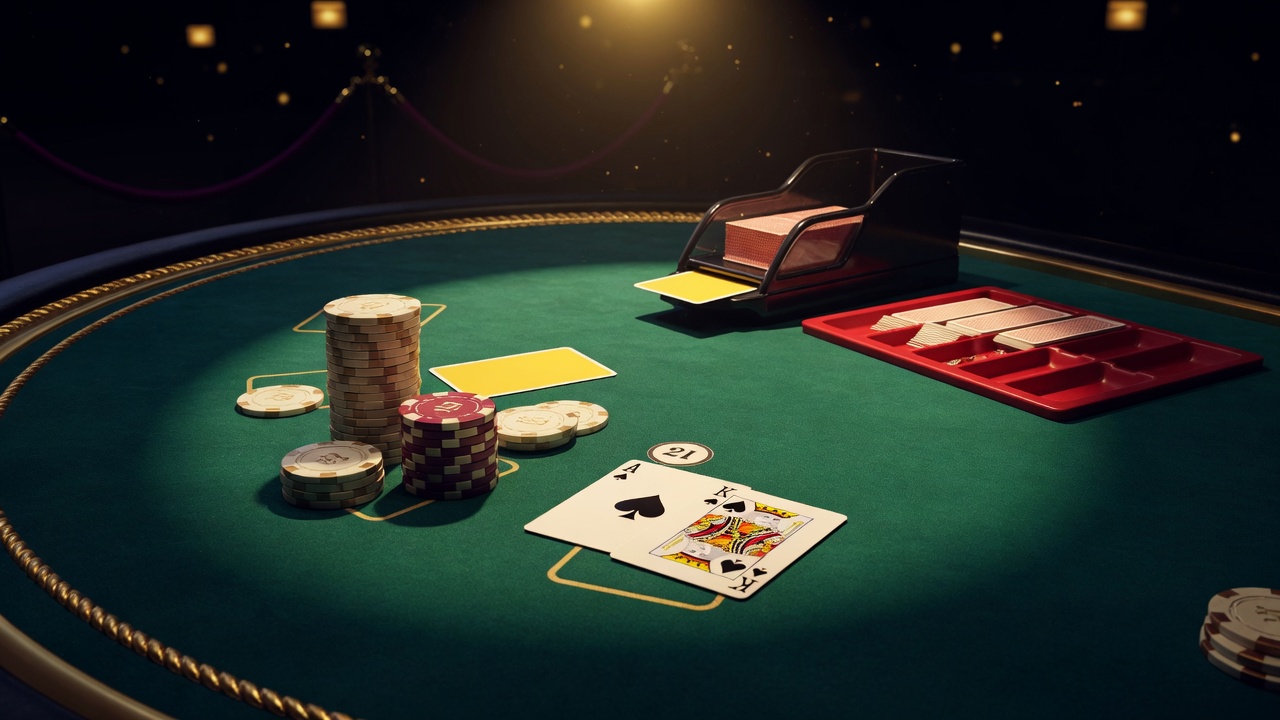

It is always nice to win money at blackjack. It is more useful to know the odds. Every casino game carries a house edge — the built-in tax that pays the lights and the dealers. Some taxes are smaller than others. Blackjack, played correctly, is one of the smallest. Author of the original desk piece: G.E. Stowik.
When you play blackjack online at a decent shoe — Bovada still deals a table game worth sitting at — you are in a game where decisions matter. The cards come out of a standard French deck, usually several at a time. After the first two cards, if you do not have 21, you choose: hit, stand, double, split, sometimes surrender. Those choices, against the dealer’s up-card, are the whole skill. Rule set matters: number of decks, whether the dealer hits soft 17, whether you can double after split.
Three plays that keep the edge small
Do not take insurance. When the dealer shows an ace, the house offers a side bet that the hole card is a ten, paying 2:1. A ten is in the hole about a third of the time. The price is wrong. Skip it unless you are counting and the remaining deck is screaming tens.
Almost always split eights. Sixteen is a dog. Two eights is a chance to start over. Rare exceptions exist in some multi-deck H17 games, or when you cannot double after split and surrender of 16 is offered — then surrender beats a hero split. Default: split.
Never split fives or ten-value cards. Ten is a strong total. Five is a double versus the dealer’s weak cards, not two lousy hands.
Play basic strategy with as few mistakes as possible and a fair 3:2 game sits around half a percent. Never sit at 6:5 blackjack. That payout change is a mugging. Practice here until the chart is muscle.
Blackjack desk · Card counting literacy
General information, not advice. Gambling involves risk. See the disclaimer.